Normatum
Latin norma — a standard, a rule, a reference.
Mission
To make expert technology guidance accessible to companies of every size — so they can get the most out of AI while staying within what regulators expect.
Vision
A world where the risks of AI are bounded, and human creativity is not.
We arrived at the same question from opposite ends of the map.
Sayantan's life has been rooted across Asia and Oceania; Ilia's professional and academic background runs through Western and Eastern Europe. Both roads led to Hong Kong, and to the MSc in Business Analytics at HKUST.
The programme taught us how to build with data and AI. It also left us with a question it could not answer: once an AI agent is given a task and left to run, what does it actually do? So we set out to understand it properly — building agents ourselves, inside a large organisation, and studying how they behave once they are given real work.
What we found is that the risk rarely sits in the model. It sits in how the agent is deployed: whether anyone wrote down what it is for, what it is allowed to touch, and who checks what it did afterwards. That finding became the basis of Chain of Intent.
Hong Kong made the problem impossible to ignore. There is no dedicated AI law, clear regulatory guidance already exists, and almost every organisation is already using AI — while the firms most exposed are the ones least able to afford help. Large consultancies are built for large clients. We built this practice for everyone else.
The people

Ilia Voroshilov
AI Portfolio & Governance Lead, TK Elevator. Author of the Chain of Intent framework. The Hong Kong University of Science and Technology.
Ilia leads portfolio governance for TK Elevator's enterprise AI programme across seven business functions, where he built the evidence model and autonomy ladder the programme now reports against. He is the author of Intent Drift at SME Scale, the study that introduced Chain of Intent, and previously worked in AI partner product management at SAP.
Voroshilov, I. (2026). Intent Drift at SME Scale. arXiv:2609.05975.
LinkedIn profile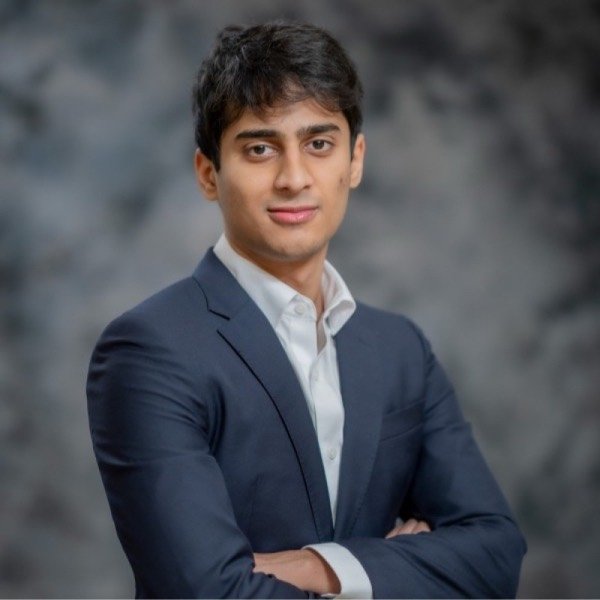
Sayantan Jha
AI Automation Engineer, TK Elevator. MSc Business Analytics, The Hong Kong University of Science and Technology.
Sayantan builds agentic AI workflows at TK Elevator, and engineered the compliance layer that encodes EU AI Act risk tiers and regional approval rules so that no high-risk use case reaches production without documented review. He came to AI governance from regulatory compliance, including an Asia Pacific compliance internship at HSBC covering anti-money laundering and KYC.
Members of our advisory board are named here once each has agreed to it in writing.
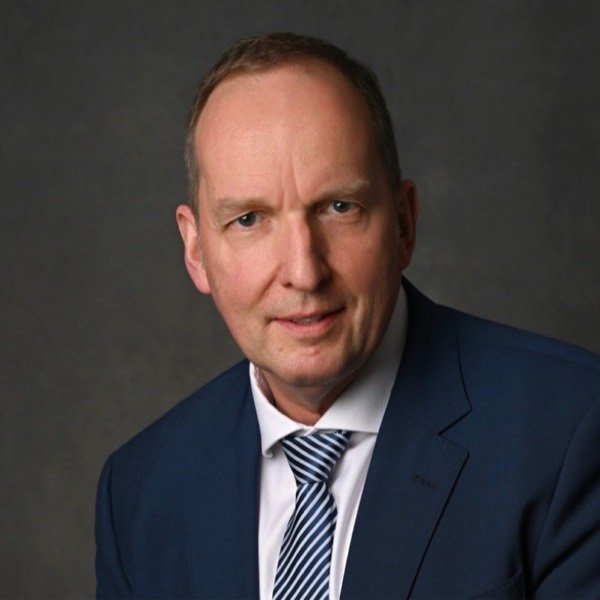
Dr Juergen Rahmel
Director, AI Research, HSBC. Professor, HKUST Business School. Lecturer, The University of Hong Kong.
Juergen is Director of AI Research at HSBC, having previously headed digital, technology and innovation for HSBC's Asia Pacific compliance function and served as Chief Digital Officer of HSBC Germany. He teaches at HKUST Business School and the University of Hong Kong, and has advised companies on machine learning and responsible AI for more than a decade.
How we work
- We tell clients when they don't need us.
- We never implement a framework or solution we haven't sufficiently validated.
- We never soften or conceal a critical finding about a client's operating model.
- We never disclose a client's weaknesses to third parties.
- We take responsibility for every AI-generated output in our work.
How we use AI ourselves
- Every output has a named person accountable for it. There is always someone behind the chatbot.
- Every decision made with AI is documented.
- No sensitive client information is ever uploaded to or stored with third-party LLM vendors.
- Every AI-driven decision passes through a human-controlled gate.
- Where regulatory regimes differ, we treat the client's own regional regulator as the governing one.
We tell clients when they don't need us. The first call is where we find out.Book a 30-minute call